
Inca Trail Porters: The People Behind Your Journey to Machu Picchu
Inca Trail Porters: The People Behind Your Journey to Machu Picchu When travelers imagine hiking the legendary Inca Trail to Machu Picchu, they often picture ancient stone pathways, spectacular mountain scenery, archaeological sites, and the unforgettable arrival at the Lost City of the Inca
Inca Land Adevntures
11/1/20265 min read
Inca Trail Porters: The People Behind Your Journey to Machu Picchu
When travelers imagine hiking the legendary Inca Trail to Machu Picchu, they often picture ancient stone pathways, spectacular mountain scenery, archaeological sites, and the unforgettable arrival at the Lost City of the Incas.
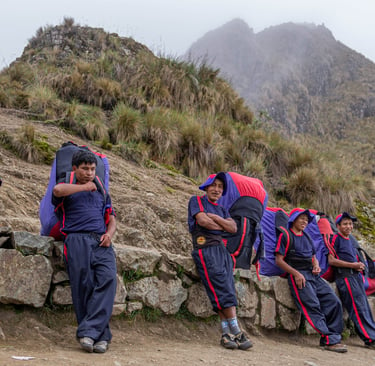
However, behind every successful multi-day trekking expedition is a team of dedicated local professionals whose work often goes unnoticed: the Inca Trail porters.
These hardworking members of the trekking team help transport essential supplies, camping equipment, food, and other materials required for the journey. Their work supports the daily organization of the expedition and helps make a four-day trek through the Andes possible.
At Inca Land Adventures, we believe that understanding the people behind the Inca Trail is an important part of understanding the experience itself.
If you are planning to hike the Classic Inca Trail to Machu Picchu in 2027, learning about the role of porters, their working conditions, and responsible tourism can help you make a more informed decision when choosing your trekking operator.
Who Are the Inca Trail Porters?
Inca Trail porters are trekking professionals who transport supplies along designated sections of the historic trail where motorized vehicles cannot operate.
Many come from communities in the Cusco region and surrounding Andean areas. Their knowledge of mountain conditions, trekking logistics, and the demands of working at altitude makes them important members of the expedition team.
During a typical four-day Inca Trail trek, porters may carry food supplies, tents, sleeping equipment, cooking materials, and other group essentials.
Their work begins well before many travelers arrive at camp. Depending on the itinerary and the organization of the trekking team, porters may leave early to transport equipment and help prepare the next campsite.
When hikers arrive after several hours of walking, the camp organization and supplies are essential to the group's comfort and daily routine.
Porters are not simply people carrying luggage. They are skilled workers whose contribution helps the entire trekking operation function.
What Do Porters Carry on the Inca Trail?
The equipment carried by porters depends on the size of the trekking group, the services included in the itinerary, and the operator's logistics.
Typical loads may include:
Camping tents and other accommodation equipment.
Food ingredients and cooking supplies.
Kitchen equipment and dining materials.
Sleeping equipment and group supplies.
Other essential items needed to organize the trek.
The weight must be managed carefully because porters work on steep mountain trails, uneven stone steps, and high-altitude terrain.
A responsible trekking operation should organize loads according to the applicable legal requirements, provide appropriate equipment, and consider the physical demands of the work.
Travelers should also understand that a personal porter, when available, is a separate service from the crew responsible for transporting shared group supplies.
Before booking, ask your tour operator exactly what is included and what luggage you are permitted to have carried.
Inca Trail Porter Laws and Weight Limits
Porter welfare is an important issue in Peru's trekking industry.
Peru's Law No. 31614, published in November 2022, established a legal framework for protecting porter workers, including provisions concerning working conditions, occupational safety, remuneration, equipment, rest, and accommodation.
The law establishes maximum carried loads of:
20 kilograms for men.
15 kilograms for women.
The law also addresses appropriate clothing and protective equipment, nutritious food, suitable overnight accommodation, occupational risk insurance, and life insurance.
These requirements are important because carrying loads over difficult mountain terrain can place considerable physical demands on workers.
Travelers who want to learn more can consult the official text of Peru's porter law and the information published by the National Superintendence of Labor Inspection.
Choosing a trekking operator should involve more than comparing prices. It should also involve understanding how the company organizes its workforce and complies with applicable regulations.
Why Porter Welfare Matters When Choosing an Inca Trail Operator
The price of an Inca Trail tour reflects much more than a permit and a guide.
A multi-day trekking expedition requires a coordinated team, including guides, cooks, porters, and operational staff. The team must transport supplies, prepare meals, organize camps, and respond to the practical demands of trekking in the Andes.
Responsible porter management should include several essential considerations.
1. Fair and transparent compensation
Travelers should feel comfortable asking how porters are paid and whether the company complies with applicable labor requirements.
A professional operator should be able to explain its compensation practices clearly.
2. Appropriate equipment
Porters need suitable clothing and equipment to work in changing mountain conditions.
Depending on the duties performed, this may include protective clothing, footwear, carrying equipment, and suitable sleeping arrangements.
3. Nutritious food and adequate rest
Working at altitude requires considerable physical effort. Proper nutrition and adequate recovery time are important elements of responsible trekking operations.
4. Safe working conditions
Operators should organize loads appropriately, comply with applicable weight restrictions, and implement occupational safety measures.
5. Respect and recognition
Porters deserve to be treated as professional members of the trekking team.
Their contribution should be recognized, and their dignity and privacy should be respected throughout the expedition.
At Inca Land Adventures, we encourage travelers to ask questions about porter arrangements before confirming a reservation. Clear information helps travelers understand the services they are purchasing and the responsibilities involved in operating a multi-day trek.
How Do Porters Help Make the Classic Inca Trail Possible?
The Classic Inca Trail is a multi-day trek through changing Andean environments, with steep ascents, stone stairways, mountain passes, and archaeological sites.
Organizing an expedition along this route requires careful planning.
Porters help transport the supplies required to support the trekking group. Their work contributes to the preparation of camps, the movement of equipment, and the daily logistics that allow the group to continue along the route.
Meanwhile, guides lead the trekking experience, provide information about the archaeological sites, and help manage the group's progress and safety. Cooks prepare meals, while other members of the team support the operation.
Every role contributes to the overall experience.
When you reach camp after a challenging day on the trail, it is worth remembering the collective effort required to organize the expedition.
The Inca Trail is famous for its history and landscapes, but its modern trekking experience also depends on the people who work behind the scenes.
What Can Travelers Do to Support Responsible Inca Trail Tourism?
Travelers can make informed choices that encourage responsible working practices.
Here are five practical recommendations.
1. Ask questions before booking.
Ask your tour operator about porter compensation, equipment, insurance, food, accommodation, and load management.
2. Compare more than the price.
A low price does not automatically indicate poor working conditions, and a high price does not automatically guarantee responsible practices. Ask for clear information about the services and labor arrangements included.
3. Understand your luggage allowance.
Find out which items the porter team carries, whether a personal porter is available, and what restrictions apply to your trek.
4. Respect the entire trekking team.
Porters, guides, cooks, and other workers all contribute to your journey. Treat everyone with respect and recognize their professional skills.
5. Follow guidance about tips.
Ask your operator how tips are normally distributed among the trekking team. If you decide to tip, understanding the arrangements helps you make an informed choice.
Responsible tourism begins with informed decisions and continues through respectful behavior throughout the journey.
The Inca Trail Is More Than a Trek
The journey to Machu Picchu connects travelers with ancient Inca history, spectacular Andean landscapes, and the cultural heritage of Peru.
It also brings travelers into contact with the people who make modern trekking expeditions possible.
Porters contribute physical strength, experience, and logistical support. Guides share historical and cultural knowledge. Cooks prepare meals in challenging mountain environments. Together, these professionals help transform a demanding mountain journey into an organized trekking experience.
Recognizing their contribution adds another dimension to the Inca Trail.
When you plan your trek, take time to understand not only the route and archaeological sites but also the people who help make the experience possible.
Book Your Classic Inca Trail 4 Days / 3 Nights for 2027
Are you planning to hike the legendary Inca Trail to Machu Picchu in 2027?
Inca Land Adventures helps travelers plan their trekking experience with information about itineraries, permits, transportation, meals, camping arrangements, and porter support according to the selected program.
Our team can help you understand the requirements of the Classic Inca Trail and prepare for the challenges of hiking through the Andes.
Whether you are planning a small-group departure or exploring a private trekking experience, we recommend booking early and reviewing the specific services included in your chosen itinerary.
Start planning your Inca Trail adventure with Inca Land Adventures.


Contact
Reach out for personalized trekking plans
Subscribe to our newsletter
+51 940188346
© 2025. All rights reserved.
+51 940188346