

Manu National Park Birding Tour – 4 Days from Cusco
Home > Birding Manu Expeditions > manu-national-park-birding-tour-4-days
Manu National Park Birding Tour – 4 Days from Cusco
An Andes-to-Amazon Birding Journey Through Peru's Manu Road
Discover one of Peru's most extraordinary birding destinations on a 4-day Manu National Park birding tour from Cusco. This carefully designed expedition follows the spectacular Manu Road, descending from the high Andes through misty cloud forest and into the warmer foothills of the Amazon.
The journey is built around birding by habitat and elevation, giving you opportunities to search for a remarkable variety of Andean and Amazonian species within a relatively short itinerary.
Depending on the season, weather and daily bird activity, your targets may include the spectacular Andean Cock-of-the-rock, Golden-headed Quetzal, Grey-breasted Mountain Toucan, Blue-banded Toucanet, hummingbirds, tanagers, woodpeckers, antbirds and Amazonian species.
This Manu birdwatching tour is suitable for birdwatchers, bird photographers, wildlife enthusiasts and travelers interested in Peru's extraordinary biodiversity. Early starts, strategic birding stops and expert local guiding help us make the most of the productive hours when birds are most active.
From the Andes to the Amazon, every change in elevation brings a different bird community.
Why Is Manu One of Peru's Best Birding Destinations?
Manu is exceptional because it is not a single ecosystem. The road from Cusco toward the Amazon crosses a dramatic elevational gradient, moving through high-Andean landscapes, elfin forest, cloud forest and lower-elevation foothill habitats.
Each habitat supports a different bird community.
High-Andean and Upper Cloud Forest
At higher elevations, birders can search for mountain specialists, hummingbirds, tanagers, furnariids and other species adapted to cool Andean conditions.
Manu Cloud Forest
As the road descends, the forest becomes wetter and richer in epiphytes, mosses and flowering plants. This is an excellent zone for mixed-species flocks, hummingbirds, quetzals, toucanets and tanagers.
Foothill Forest
Lower elevations bring warmer conditions and a changing bird community. Here, birders can search for toucans, woodpeckers, antbirds, flycatchers, tanagers and other foothill species.
River and Forest-Edge Habitats
Riverbanks, open areas and forest edges can add another dimension to the birding, with opportunities for parrots, macaws, herons, kingfishers and other species depending on the location and conditions.
This diversity of habitats is one of the main reasons Manu birding is so productive: rather than spending four days in one environment, you travel through several ecological zones.
Target Birds
Possible sightings include:
Iconic Manu Birds
Andean Cock-of-the-rock
Golden-headed Quetzal
Grey-breasted Mountain Toucan
Blue-banded Toucanet
Versicolored Barbet
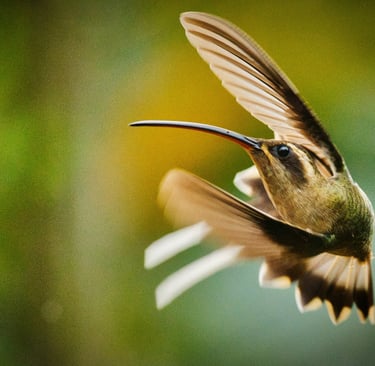
Hummingbirds
Long-tailed Sylph
Gould's Inca
Amethyst-throated Sunangel
Other hummingbird species depending on flowering conditions
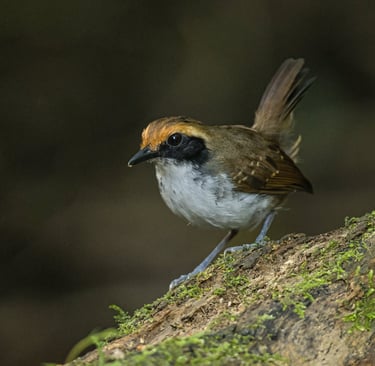
Forest Birds
Tanagers
Flycatchers
Woodpeckers
Antbirds
Furnariids
Trogons
Motmots
Amazonian Birds
Macaws
Parrots
Amazonian Umbrellabird
Hoatzins
River-edge species
Important: Bird sightings are never guaranteed. Species and numbers vary with season, weather, habitat conditions and daily bird activity.
Cloud Forest Birding Peru at Wayqecha Biological Station
Day 1 – Cusco to Wayqecha: High-Andean & Cloud Forest Birding
Day 2 – Wayqecha to the Cock-of-the-Rock Area
Wayqecha Biological Station (Operated by Asociación Conservación Amazónica – ACA)
Birding by Habitat Along the Manu Road
One of the greatest advantages of this Manu birding tour is the rapid change in habitats as you descend from the Andes toward the Amazon.
High Andes
Open mountain landscapes and high-elevation habitats support specialized Andean birds.
Cloud Forest
Moss-covered forest, orchids, epiphytes and flowering plants create excellent conditions for hummingbirds, tanagers, toucanets and mixed-species flocks.
Foothill Forest
Warmer forests bring new species, including antbirds, woodpeckers, flycatchers, toucans and Amazonian species.
Forest Edges & Riverine Areas
Open habitats and watercourses can attract parrots, macaws, herons, kingfishers and other species depending on the location and season.
Why This Matters for Birders
The Manu Road is productive because every change in elevation changes the composition of the bird community. For birders trying to increase their species list, this makes the Andes-to-Amazon transition particularly valuable.
Manu Bird Photography
Manu is not only a destination for birdwatchers. It is also an outstanding environment for bird photography.
Depending on the itinerary and conditions, photographers may have opportunities to work with:
hummingbirds
tanagers
toucanets
quetzals
Cock-of-the-rock
woodpeckers
macaws
parrots
forest birds
birds along forest edges
The itinerary emphasizes early-morning bird activity, strategic stops and flexible field time, giving photographers opportunities to work with natural light, behavior and habitat rather than simply collecting sightings.
Recommended equipment
100–500mm or 200–600mm telephoto lens
300mm or 400mm lens
Camera with good high-ISO performance
Monopod or lightweight tripod
Extra batteries
Rain protection
Binoculars
Lens cloth and waterproof camera protection.
Manu National Park Birding Tour – FAQ
How many bird species can I see in Manu in four days?
Manu has extraordinary bird diversity, but there is no guaranteed number of species for a four-day tour. Your final list depends on season, weather, habitat conditions, guide strategy and bird activity.
Is Manu good for bird photography?
Yes. The combination of cloud forest, foothill forest and Amazonian habitats offers opportunities to photograph hummingbirds, tanagers, toucanets, quetzals, Cock-of-the-rock and many other species.
Can I see the Andean Cock-of-the-rock?
The itinerary is designed to include a visit to a Cock-of-the-rock viewing area when access and conditions allow. As with all wild birds, sightings cannot be guaranteed.
What is the best time for birdwatching in Manu?
Birding is possible throughout the year. Drier months can provide easier travel conditions, while wetter months can offer lush vegetation and active birdlife. Your ideal travel period also depends on your target species.
Is this tour suitable for beginner birdwatchers?
Yes. You do not need to be an expert birder. The tour can work for beginners, experienced birders and bird photographers, although the long driving days and early mornings should be considered.
Is this a bird photography tour or a birdwatching tour?
It is primarily a birdwatching tour, but it is also suitable for bird photographers. Private departures can be customized around photography priorities where operationally possible.
How difficult is the 4-day Manu birding tour?
The walking is generally manageable, but the tour involves very early starts, long road journeys and changing climates as you descend from the Andes toward the Amazon.
How high is Manu?
The route crosses a major elevational gradient, from high Andean areas above 3,000 meters to much lower Amazonian foothill environments. Exact elevations depend on the itinerary and overnight locations.
Why Choose Inca Land Adventures?Aquí debemos dejar de sonar como una agencia genérica.
Local Cusco-Based Operator
We are a locally based tour operator in Cusco with experience organizing personalized journeys through the Andes and Amazon regions.
Birding-Focused Itineraries
Our Manu programs are designed around birding opportunities, habitats and target species—not simply sightseeing.
Small & Personalized Groups
Smaller groups allow greater flexibility during birding stops and make it easier to adapt the pace to the group.
Experienced Local Guides
Our guides understand the landscape, local conditions and birding routes of the Cusco–Manu corridor.
Flexible Birding Strategy
Bird activity changes throughout the day. Whenever possible, we adapt stops and timing to current conditions rather than treating the itinerary as a rigid schedule.
Birding by Habitat Along the Manu Road
Explore a remarkable range of Andean and cloud-forest habitats along the Manu Road, with opportunities to observe different bird communities as elevation and vegetation change.
Target Birds & Species
Look for a diverse selection of Andean and cloud-forest birds, including tanagers, hummingbirds, toucans, quetzals, barbets, and other high-elevation species.
Manu Bird Photography Opportunities
Photograph birds in their natural habitats, taking advantage of good light, diverse backgrounds, and changing elevations for both detailed portraits and environmental images.
Best Time for Birdwatching in Manu
Manu can offer excellent birdwatching throughout the year. The best timing depends on weather, bird activity, seasonal conditions, and the species you want to photograph.
Early morning departure from Cusco
Begin your Manu birding expedition with an early departure from Cusco. The route climbs toward the eastern Andes and the high-elevation Acjanaco Pass, before descending into the spectacular cloud forests of the Manu region.
Birding stops along the route focus on mountain habitats and the transition into cloud forest.
Birding focus
High-Andean birds
Mountain tanagers
Hummingbirds
Furnariids
Mixed-species flocks
Mountain toucans
In the afternoon, continue toward Wayqecha Biological Station / cloud forest area, where the cooler and humid forest provides a completely different birding environment.
Overnight: Wayqecha or equivalent cloud forest lodge
Meals: Breakfast, lunch and dinner
Why This Is a Signature Manu Birding Expedition
Located at 2,900–3,500 meters above sea level in the cloud forests of the eastern Andes, Wayqecha is one of the few field stations in the world dedicated to studying cloud forest ecosystems, which are among the most threatened habitats on Earth.
✅ What Wayqecha Does for Nature:
Conservation Research: Hosts scientists studying climate change, species migration, and forest ecology. Their research helps inform conservation policy and action in the Andes-Amazon transition zone.
Habitat Protection: Protects over 1,450 hectares of cloud forest, crucial for many endemic and migratory bird species.
Reforestation & Restoration: Supports projects that restore degraded areas and test high-elevation reforestation methods.
Environmental Education: Trains students and community leaders in ecology and sustainable practices.
Biodiversity Monitoring: Continuous monitoring of bird, amphibian, plant, and insect species to understand long-term environmental trends.
Begin with a final early-morning birding session around the lodge and nearby forest.
Depending on conditions, the final session may focus on forest-edge species, hummingbirds, tanagers, parrots or other local targets.
After breakfast, begin the return journey toward Cusco, with selected birding stops along the Manu Road when time and road conditions permit.
Arrive in Cusco in the afternoon or evening, depending on road conditions and the day's birding opportunities.
Meals: Breakfast and lunch
Day 4 – Final Birding Session & Return to Cusco
After an early breakfast, continue descending into the warmer foothill forest.
The change in elevation brings a noticeable change in birdlife. We focus on forest edges, trails, bamboo and other productive habitats according to current bird activity.
Birding focus
Antbirds
Toucans
Woodpeckers
Flycatchers
Tanagers
Parrots
Macaws
Hummingbirds
The afternoon can be adapted according to weather, road conditions and the species you are targeting.
For bird photographers, this flexible approach allows the guide to spend more time where bird activity is strongest rather than following a rigid sightseeing schedule.
Overnight: Biological station lodge
Meals: Breakfast, lunch and dinner
Day 3 – Foothill Forest & Amazon-Andes Transition
Start early, when bird activity is at its highest.
Explore cloud forest trails and productive roadside habitats while searching for mixed-species flocks, hummingbirds, tanagers, toucanets and other Andean species.
Continue descending along the Manu Road, one of the most productive birding corridors in southeastern Peru.
Main targets
Golden-headed Quetzal
Grey-breasted Mountain Toucan
Blue-banded Toucanet
Versicolored Barbet
Hummingbirds
Tanagers
Woodpeckers
Flycatchers
Later, visit an established Andean Cock-of-the-rock viewing area when conditions and access allow.
Watching the males gather and display at a lek is one of the signature experiences of birding in Manu.
Overnight: Cock-of-the-Rock area lodge
Meals: Breakfast, lunch and dinner
Not Includes
Includes
Trips Managed by Local Expert
Easy, Fast, Risk-Free Bookings
Personalized Small Group Tours
Great Value for Money
Unique, Customized Itineraries
Best Local Certified Guides.
WHY CHOOSE Inca land adventures?Inca land adventures is a family owned travel agency and a local tour operator based in Cusco with personal experience over many years of trekking. Inca land adventures is a 100% Cusqueñian Company without any shareholders.
Our dream as a locally based company is to create small personalized tours & treks strictly and only operated by local professional staff catering in PERSONALIZED and HIGH QUALITY SERVICE.
We take pride in our reputation as a RESPONSIBLE & SUSTAINABLE tour operator. Our staff are our extended family. We ensure they are supported financially by offering them a fair salary. We are so proud of our team! Without them, we wouldn’t be able to offer the best service and lifetime experiences to our clients.
Airport pickup/drop by a private vehicle
Wayqecha Cloud Forest Lodge – Discover high-elevation endemics and stunning Andean views in this pristine cloud forest ecosystem managed by the Andes Amazon Fund.
Cock-of-the-Rock Lodge – Witness the dazzling courtship displays of the iconic Andean Cock-of-the-Rock at one of the best viewing spots in the region.
Manu Learning Centre / Biological Station Lodge – Explore lowland rainforest trails teeming with Amazonian birdlife, including toucans, tanagers, macaws, and antbirds.
Professional birding guide with expert knowledge of Manu's avifauna.
Opportunities to spot over 500 species, including rarities like the Masked Trogon, Amazonian Umbrellabird, and Rufous-crested Coquette.
Comfortable eco-lodge accommodations in strategic birding locations.
Perfect for: Bird photographers, ornithologists, and wildlife lovers looking to experience the magic of Manu in a compact yet intensive itinerary.
Group Size: Small groups for personalized birding experience
Best Season: April to November.
Reserve your Birding Expedition today and experience Manu’s unmatched avian diversity!
PRICE: Birding Manu Expeditions 4D/3N : 2026 per person
1.- traveller $2700.00
2.- travellers $1550.00
4.- travellers $1400.00
6+ travellers $1300.00.


Contact
Reach out for personalized trekking plans
Subscribe to our newsletter
+51 940188346
© 2025. All rights reserved.
+51 940188346